Sunday, January 19, 2014

Dog Tales

I read in the paper recently a story about a dog which had been away four years and returned home.    Where had he been all that time?  What had he eaten?   How did he find his way home?    Another story said, research shows a dog thinks like a person.   Amazing animals!

We have two dogs: Dakota, a Sheltie-Pekingese mix who is six and gentle, and Bailey, a beagle who is four, lovable, intelligent and mischievous.   Bailey likes to invade the kitchen trash and the bedroom laundry basket.   Given the chance he will scarf down a person's temporarily unattended dinner.   Dakota follows us around.  If someone is taking a shower, Dakota will lie on the bath mat;  if someone is on the the computer Dakota will lie a few feet away.

Bailey with the container of ice cream he stole from the kitchen trash and dragged outside to snack on.

Bailey peeing in the snow.

Dakota cuddling in my lap.

Dakota Christmas 2012


But this post is mainly about another dog, Doodle, a beagle I had while taught at Putney School in Vermont in the 1960's.  Putney is located on a heavily wooded hill top and dogs run free to roam the woods.   Doodle acquired his name because his predecessor, who was killed by a car, was named Yankee.  Doodle always knew where I was and often, when I was teaching, there would be an energetic scratching on the classroom door which a student would open and Doodle would come in and fall asleep under my desk

At Putney I was the trip director as well as an English teacher and in the summer of 1964 I decided to take six students to the Colorado Rockies for six weeks of hiking and camping.   Without giving it much thought, I opted to take Doodle with us.  Our first trip above Nederland (outside of Boulder) took us up through a glacier, over the continental divide down the west side and across a raging river over which I had to carry Doodle because he was trembling with fear.   Doodle was always running off chasing interesting smells.    On one such excursion he didn't return.  We called and searched but no Doodle.   Heartbroken at the loss of our dear dog we carried on.

Two more nights passed; we went up over the continental divide again at a more northerly spot and eventually down to a parking lot.   We were miles from our car, so we hitched a lift on the back of a pick up truck, the driver of which kindly offered to take us back to our car.  As we were driving up towards our original parking lot, there amazingly was Doodle staggering down the side of the road.  We stopped, Doodle leapt into the back of the truck, turned himself inside out with joy and quickly dropped asleep on my lap.

Doodle, realizing he was lost, followed our original path across the raging brook, over the continental divide, across the glacier and down.  He hadn't eaten (or slept) for two days but was determined to find us. What an incredible feat!   What a dog!

Doodle was also famous for his comical feats.  I lived with my son Don (who was with us on the Rockies trip) in a former barn, a corner of which had been converted into an apartment..  The main section was the school's theater.   One Christmas season I decided to put Doodle in my car (located across the street in a tractor shed), knowing that he would bark that unique beagle bark when the people came for the performance.  The production that year was Chekhov's "The Cherry Orchard," a somber, humorless look at Russian life.

I settled in with the parents to watch when, a few minutes into the production, Doodle entered stage left, flipped up his leg, relieved himself against a sofa, and then ate a biscuit which had been left out as a prop. The audience by then was roaring with laughter. Everyone except me and our hard-working drama teacher.   A parent took mercy, picked up Doodle and handed him to me.  I was mortified and apologized profusely to the drama teacher, and the play went on.

On another occasion it was town meeting day in the town of Putney, three miles down hill from the school.   I left Doodle at the school, hitched a ride with another teacher to the meeting where such local issues as stop signs and pot holes in the road were discussed   The selectmen and the lady town clerk sat importantly on the stage.  Again Doodle showed up on stage and stuck his snout under the dress on the town clerk.   This time I leapt into action and snatched Doodle away.   I have no idea how the dog knew I was there.

Finally a sad note:  Before I went to Paris in 1968 to teach at the American School, I gave Doodle to a doctor who lived in Brattleboro, eight miles down the road from Putney.   I learned that Doodle escaped! The doctor terrified that he had lost our dog, employed a variety of remedies to lure him back, the most interesting being acquiring several female dogs in heat! When Don and I returned, there Doodle was. He had walked the eight miles back to Putney School looking for Don and me.  What loyalty!

Bailey, Dakota, and Doodle, like so many dogs, exemplify that noblest of emotions: unconditional love.


Saturday, November 9, 2013

Where E'er You Walk

For me the beauty of music is epitomized in the aria "Where e'er you walk," the exquisitely lovely song from Handel's opera "Semele."  Here it is: http://www.youtube.com/watch?v=83zpLsWMoFc.   Is there any more haunting love song?

Where e'er you walk
Cool gales shall fan the glade
Trees where you walk
Shall crowd into a shade.
Classical music has always been an important part of my life.   My performing career started when I was five and a choir boy in our local church.  I wore a black robe with a white cassock, a wide white collar and a floppy bow tie.   My solo career came when I was seven and singing Handel's "Halleluiah Chorus."   At the end there are three halleluiahs followed by a dramatic pause and then a final halleluiah.   I lost count and in the dramatic pause I bellowed "HAL".  Everyone looked at me in shock.

I sang in the high school glee club, the Harvard Glee Club (first tenor) and the  University Choir.    Have you ever heard a sixteenth century motet sung by a men's choir?   Such music would turn an atheist into a believer. Here is a recording of  " O Magnum Mysterium": http://www.youtube.com/watch?v=zeKvNxYMDxE   The main functions of the choir was to sing in Memorial Church seven days a week.  One of our less glorious moments came when we were invited to perform for the Harvard Club of Boston.   Our hosts put us in a holding room with a huge vat of margaritas which we dipped into generously.   When it came time to sing we were all loopy.   Somehow we got it together and out came the deeply religious medieval motets.   No one guessed our conditions.  

In grad school I taught myself the recorder and played with a recorder club,  Then at Putney School, where I went to teach  English, I taught recorder to the children at the local elementary school and formed a recorder club with Putney students.   We put on two full evening concerts.   I was also the tenor soloist in the school's madrigal group.   The music director at Putney, a wonderful man, liked to rehearse to the point my voice became hoarse.  The thought of singing solos with a hoarse voice was so scary I had the habit of running ran off and hiding until my voice returned all the while avoiding the music director.  Then, wearing my only suit and work boots I stood at the front of the orchestra and sang the first of many arias of Handel's Messiah "Comfort ye, comfort ye, my people."  In the audience of several hundred parents were, gulp, some famous musicians.


Not all my recorder performances were greeted with applause.  When I was a hitchhiker in Mexico City, during my young and restless days, I played the recorder on the streets with my hat on the pavement, to support myself.   I was doing quite well, but, as luck would have it, the police got wind of my activity, and arrested me for working without a permit.   I was jailed for five days in solitary confinement and was eventually deported..

Fast forward to the 1990's: we started our son, Thabie, who was 10, on the piano, using the Suzuki method, and our daughter, Palesa, on the piano, using the traditional method.   Palesa soon discovered her passion was the flute.   As they flourished they gave recitals, giving me a chance to accompany them on the recorder.  Thabie played annual concerts at my mother's retirement community with me playing along in the Bach minuets.   When my mother passed away, Thabie, Palesa, and I played at her memorial service.  My mother, who taught me my love of music, would have been pleased. 

 
Thabie, Palesa and I play a Trio Sonata at my mother's retirement community


Palesa gave a high school senior recital where I joined her in a Handel trio sonata.  Since then Thabie has become a professional musician with a Master's in music and a flourishing piano studio.   Palesa played in the orchestra for a Harvard production of Mozart's "Cosi von Tutti" but then became involved in other interests.

 
Thabie in recital in the mid-90's

 
Palesa (with piccolo) marches with the high school band.in the Homecoming Parade


I remember hearing "O Magnum Mysterium,' O Great Mystery, about the birth of Jesus, sung by a men's octet at George Mason University (where I was an usher) and thinking how could I ever have had doubts.   I remember hearing the slow movement of Bach's third orchestral suite played by the Boston Symphony and marvelling that any music could be so beautiful.  But these are mere words. Music is a universal language that needs no words to express our deepest feelings: joy, sorrow, mystery, love. It acts as unifying thread through the different chapters of our lives.   It is a language understood equally in Germany, Russia, or India, understood " where e'er you walk."

Monday, September 2, 2013

Fist Bumps, Interrupted

After my fist-bump activities in Brooklyn, Harper's Ferry, and the Outer Banks, I said to Qenehelo, my wife, that I needed suggestions for more physical challenges.  She proposed hiking around Lake Fairfax in nearby Reston.

So off we went a couple of Saturdays ago on the 3 mile scenic trek.   I managed well including going over some steep, short rises infested with tangles of exposed roots and rocks.  When we finished it was again fist bumps all around.


This is the half way point around the lake.


Alas, in the middle of Saturday night (early Sunday morning, actually) I woke with my left knee so sore that it wouldn't support my weight.    Apparently I had injured myself going over the exposed roots.   A visit to an emergency clinic with diagnosis of KNEE EFFUSION and few days of ice and my knee began to feel better.

But not so fast.   On Wednesday I developed a severe pain in my right hip. It took six days to get an appointment with an orthopedist who diagnosed not my hip but spinal stenosis.   I mention all this in the interest of full disclosure.   Right now I'm controlling the pain with Tylenol and doing exercises given to me by a physical therapist. 

Oh the frailty of man's body.   It's clear I ran up against some physical limits.   But I'm working on getting back in shape and looking forward to more fist bumps in the future!


Thursday, August 8, 2013

Harper's Ferry Fist Bumps

What do Harper's Ferry and Brooklyn have in common?     Brooklyn is highly urban with store fronts and restaurants, topped by apartments on the higher floors.  Cars and cabs vie for street space and crossing the streets on foot is hazardous.  Harper's Ferry, by contrast, is bucolic, set on the confluence of the Shenandoah and Potomac Rivers.  The mid nineteenth century village is located on the eastern tip of West Virginia with Virginia across the Shenandoah to the south and Maryland, across the Potomac to the east.  The town exists as it did over a century and a half ago and is famous for John Brown's daring raid on the U.S. armoury in 1858.  As you stand in the village everywhere is up.  So what could they possibly have in common?

The thing they have in common is that in each I learned I could do  more than I thought I could.   I chronicled my earlier adventures in the "Browsing Brooklyn" post.   A couple of weeks ago Palesa and her boyfriend Jeff came to visit and we decided one day to go to Harper's Ferry.  My plan had been to sit on a bench while the more hardy explored the village but somehow I got started up the main street and for some reason I then decided to try to ascend "Jefferson's Rock."  the highest point.   With my cane in my right hand and daughter Palesa holding my left, up we went.


Here we are starting up!


At the top is a view that Thomas Jefferson famously described as "worth crossing the Atlantic for."


Here I am near the foundation of an old church with son Thabie and daughter Palesa.


And finally on our way down after sharing fist bumps all around.   Kindly ignore the impression that Jeff and Palesa are half carrying me!   I did it after all and I'll admit I felt pretty proud of myself!


After Jeff and Palesa left, Qenehelo, Thabie, and I drove to Kill Devil Hills on North Carolina's outer banks where, flushed with my activities at Harper's Ferry, I undertook what for me were more physical challenges.   The first was at the site of the Wright Brothers first flight in 1903.   The flight took off from the top of a hill which I climbed up unassisted, albeit with Thabie at my side.


Here I am at the bottom of the hill.   The little specks at the top are people.
 
 And here I am at the top where the first plane took off.  Pay no attention to the small kids who doubtlessly scampered up with ease.  


The next day we went to Jockey Ridge State Park, where the second highest dune on the Atlantic is located.  Hang gliders launch themselves from the top.   It was a slow slog through soft sand but again I made it!


Here I am near the top of the dune with hang gliders in the background.


My wife Qenehelo and I near the Bodie Island lighthouse.

Finally we went to the Elizabethan Gardens, a ten acre botanical paradise, the functional equivalent of Brooklyn's Botanical Gardens where I tooled around in a wheel chair.   This time it was just my two feet.   In an earlier time these would be modest exploits, but now they taught me that if I think I can't do something, give it a try.


Sunday, July 21, 2013

Assisted Living

Have you ever visited anybody in an assisted living facility?   It's where they put people who can't take care of themselves: they can't dress themselves, go to the toilet without help, remember who their friends are, know when it's time to take their medications.   Some of the people at a facility I visited, I admit, did indeed seem to be enjoying themselves.   When I asked a group of Jingo players what was the differende3 between Jingo and Bingo, one old lady chirped: "the name!" The experiences, however, seem to be quite variable.

During the last two years of her life, my mother had suffered a series of transient ischemic attacks and suffered from dementia as a result.   She knew who we were, but clearly couldn't take care of herself.  When he was in high school my son Thabie gave piano concerts in assisted living facilities.  The residents whimpered for their cookies and kool aid while Thabie was playing.  Nurses tend to talk to them as if they were children.   It's still a place you go to only when all other options have been excluded.

A friend of mine, who is just a year older than me, was put in assisted living by his son who thought his dad should not be living alone.   My friend didn't really need to be in assisted living but there were no independent apartments available in the retirement complex.   We visited him there four or five times and walked around where we saw old people playing bingo or sleeping while watching TV: a thoroughly depressing place.   He said the upper floors were filled with people suffering from decrepitude or dementia.   My friend said he was depressed, especially in the morning when he would wake up with nothing to look forward except sitting in his chair. 

For this guy there was a happy ending as he was able to move into an independent living apartment with a gym with trainers, clubs and speakers, a library, doctors and dentist offices.   The majority of residents were tooling around at good speeds in their walkers.  My friend was much, much happier and we were happy for him.  He drove his walker like a teenager in a sports car.

These visits made me ask myself, how do we spend our final years?   It seemed that the people in assisted living were essentially sitting around waiting to die.   Nobody should be doing that.  Everybody, no matter how decrepit or demented, deserves to be treated with respect and dignity.   Everybody, as far as possible, should be engaged in meaningful social interaction and individual creative activity.  Our final years need to be as important as years in our twenties or thirties, filled with activity we find valuable.

I confess that my own inclination has been to spend too much time reading in my living room chair
My recent trip to Brooklyn (see my post "Browsing Brooklyn")  was one successful effort at moving around more and soon I'll be trying to hike the easy trails in Shenandoah National Park.


Monday, July 8, 2013

Winter in the White Mountains: An Adventure Story

Old guys, like me, when we look back, we recall stuff we've done that seems risky and immature.  With our current maturity and wisdom, we never would have done such a foolish thing.  In today's post, I recall such a scary adventure.

In the 1960's I worked at Putney School in Vermont where I was an English teacher and Head of Trips.   In the latter capacity, I ran the fall and spring camping trips that all the students went on as well as a couple of optional winter climbs in the White Mountains.   This story involves a climb of Mount Adams, the second highest and most challenging winter climb in this mountain range.

With my friend Bob, the biology teacher, and me as leaders, we left school after class on Friday, and went to my cabin in Crawford Notch where we spent the night.   Up at 4 a.m. Saturday morning, we had breakfast and took a short drive to the trailhead where we put on snowshoes for the arduous climb through thigh deep snow to Crag Camp, a cabin at treeline where we spent Saturday night.   After breakfast Sunday we put on crampons (a set of  metal spikes strapped to the bottoms of our boots) to allow us to navigate the ice above timber line. 

Mount Washington is famous for having the world's worst weather and the same if true for Mount Adams.  As we climbed upward the wind grew stronger and stronger.   By the time we made the summit the wind was howling so loudly that we had to yell in one another's ears to be heard.   I later learned that the temperature was 30 below zero and the wind was 100 miles an hour, readings taken by an Appalachian Mountain Club expedition (they had also set out on the same day and had turned back wisely).   The standard formula is 30-30-30  meaning at 30 below with a 30 mile an hour wind, exposed flesh freezes in 30 seconds.
Mt Adams, New Hampshire, Winter
I knew we had to get off the summit quickly and so I chose an alternate route down the east side of the mountain so we could be out of the fury of the howling wind.   I had the habit as leader of regularly looking back to be sure everybody was with me.   The second time I looked back I saw that only four students were behind me with the other three students and Bob nowhere in sight.  We yelled but heard and saw nothing.  I decided we would have a major disaster if we spread one by one to look, so I took my four students down to the col,  the low spot (still above tree line) between Mounts Adams and Jefferson.  I arranged the four in a tight circle with ponchos on the outside to trap the warmth.

With my students relatively protected I started back up the summits alone to look for Bob and the three students by myself.   As I climbed I kept looking back at the circle of four protected by their ponchos.  At one such look back, the students, then no bigger than ants, started gesturing wildly and pointing.   Sure enough, around the bend came Bob and his three students.   I hurried back to find out what had happened!

What I discovered was an incredible feat of heroism on Bob's part.   The crampon on one of his student's boots came off, the strap broken.   Hiking above tree line was impossible without two crampons.   Bob had somehow managed to get string out of his pack and fashion a makeshift crampon strap.  Remembering the 30-30-30 (on this day actually 30-100-10) rule, I have no idea how he managed to do this.

The rest of the descent was uneventful.  The only minor casualty was with 6'4" Garrett who could never find ski pants that were long enough and so had a pair on that did not fully cover his ankles causing him to acquire nasty frostbite.   Because of this, Garrett had to miss our annual ski trip to Stowe, Vermont, but he proudly declared from the school's infirmary, "It was worth it!"

In retrospect, from my current vantage point, I should have turned back.  But it's an open question: which is preferable, my youthful spirit of adventure or my "mature" caution.

Sunday, June 23, 2013

Browsing Brooklyn

When I began this blog last February, I pontificated to the effect  that the past was history, beyond our control.   The only events over which we could exert control were the present and the future; therefore, don't fret the past.  I then proceeded, over some eighteen blogs, to ruminate on things long past: my hippy days, my time as a Peace Corps Volunteer, and my foreign service experiences.

Today: back to the present or very recent past.  I had made up my mind that, due to declining energy levels, travel was something I could no longer manage.   Specifically and painfully I would see my daughter Palesa's apartment in Brooklyn only through emailed pictures. I even thought maybe if I fly it would be easier!  My wife, Qenehelo, son Thabie, and daughter, Palesa, all  argued that all I had to do was sit in the front passenger seat of the car, tilt the seat back and take a nap.  Finally I was persuaded, and by George we made it!   And in good shape.

Not only that, I actually tooled around Brooklyn on my two feet.   We went to beautiful Prospect Park, across the street from Palesa and Jeff's apartment where we walked to the edge of a lake. 


Qenehelo and I in Prospect Park


Palesa and me in her apartment


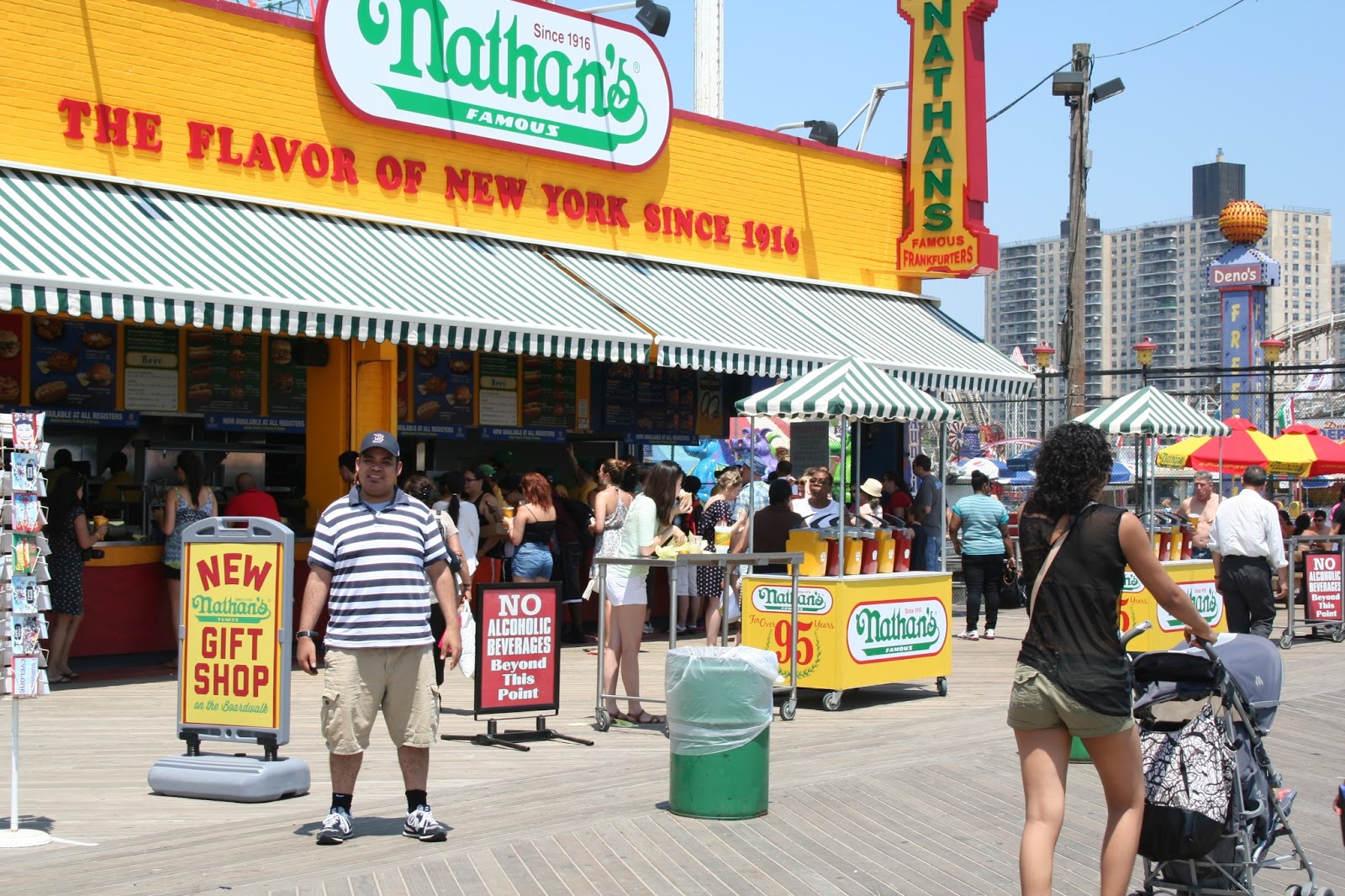
The next day we went to Coney Island, where the rides were shut, the effects of Hurricane Sandy were still evident but the board walk had lots of traffic.   I could hardly believe I was doing this stuff.
Thabie at Coney Island
                                                          
Then we went to the Botanical Gardens, my personal favorite place where, we borrowed a wheel chair and I tooled around, the energy supplied by Palesa.


Here I am tooling around the Botanical Gardens!


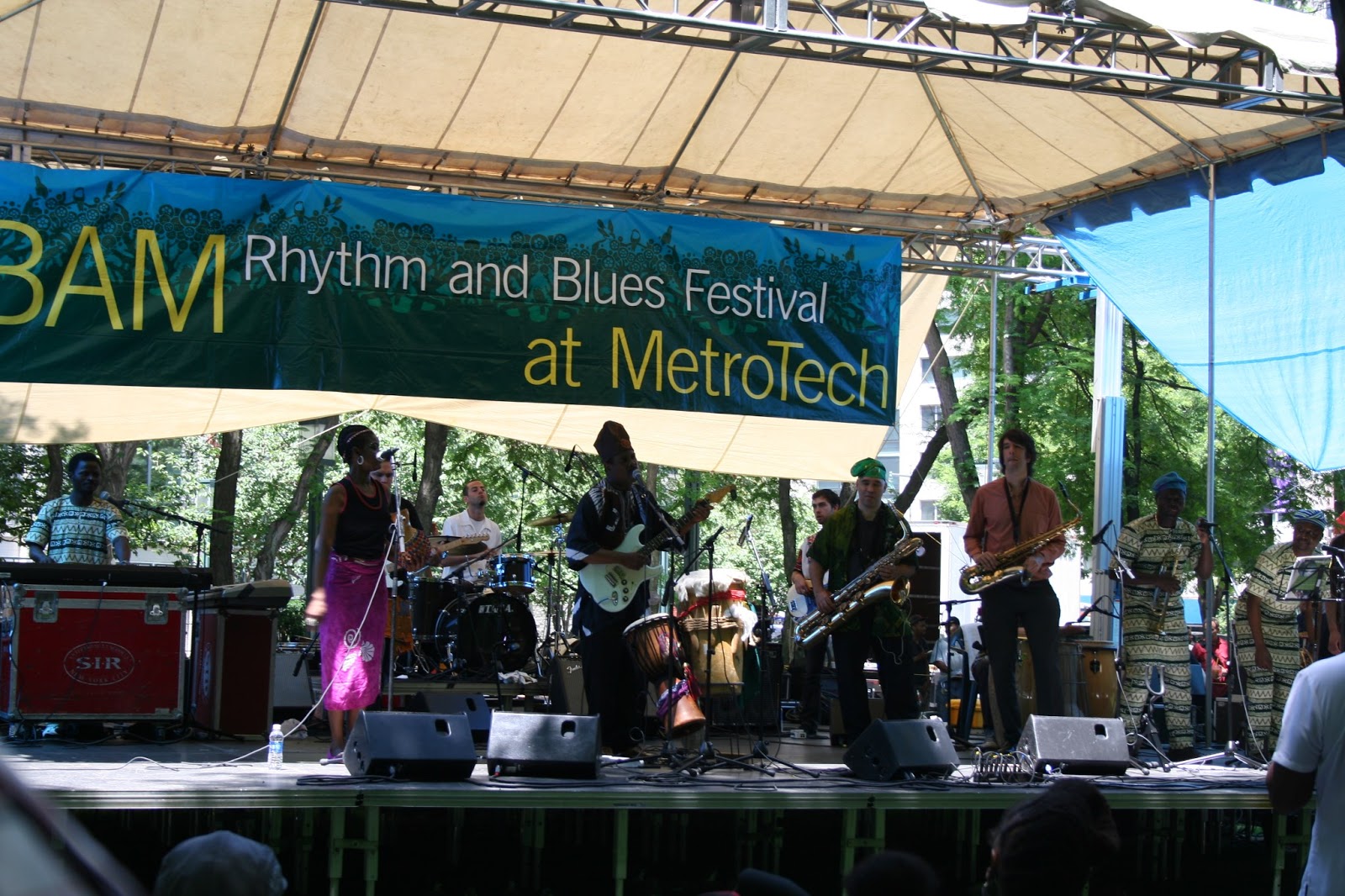
The next day we were off to the Brooklyn Museum, again on my own two feet, African art, ancient Egyptian stone carvings, Rembrandts, contemporary American art.   I had had a stereotypical notion of Brooklyn as a place of run down apartments and not much else.   Wrong!  Botanical gardens, parks, museums, and more.   Not the borough I had conceived of. On the next day we walked four or five blocks to an outdoor concert of African music near Metro Tech Center Commons where people were dancing and I struck up an acquaintance with Daryl from Harlem.


Music at the MetroTech Commons in Downtown Brooklyn


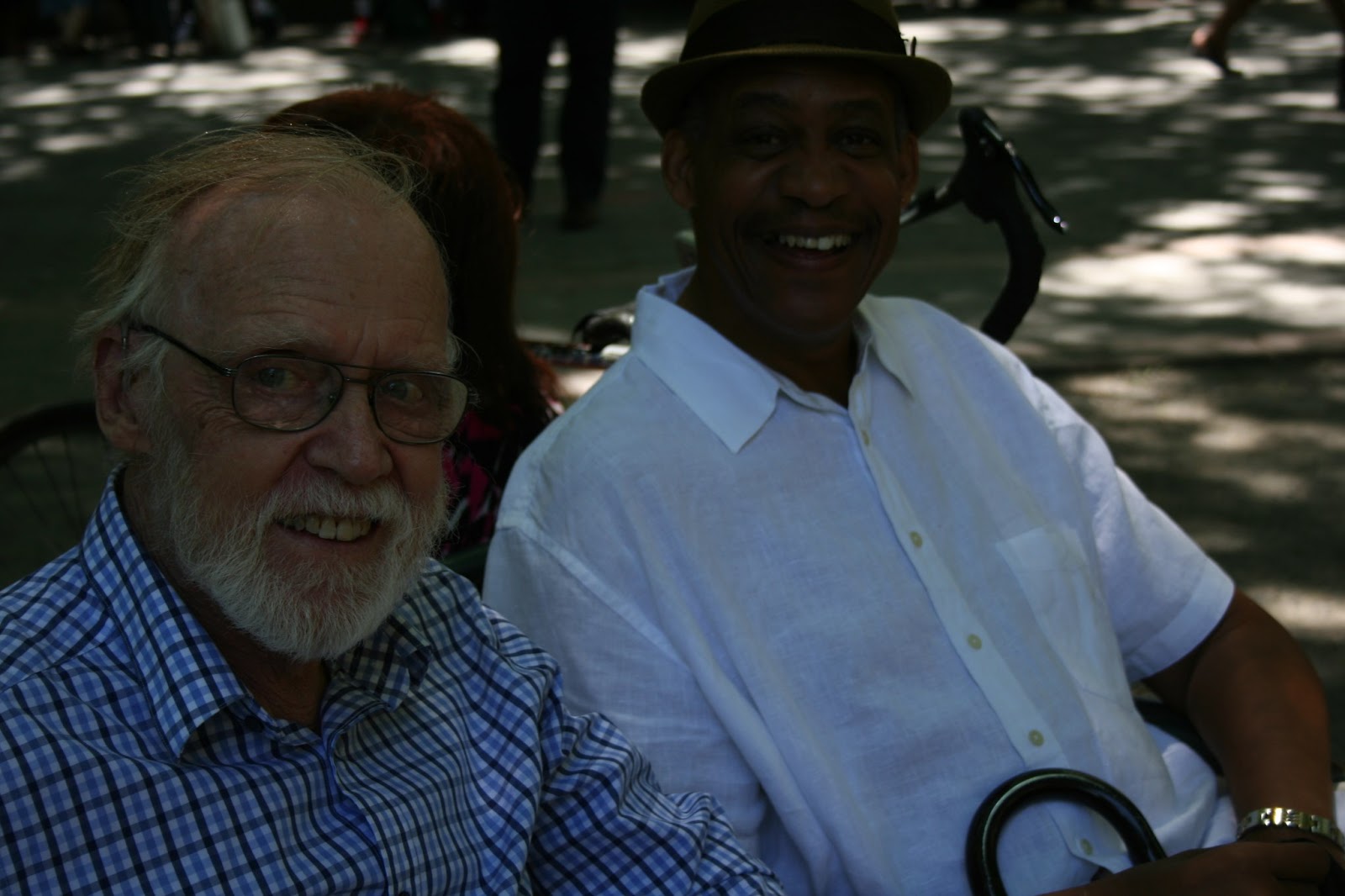
Here I am with Daryl


I realize that all this sounds like the tedious scribblings on travel post cards.   But the main point was that I was actually doing it.   A week earlier I would have said that all this was the stuff of dreams, nothing I could actually do.  The lesson for me was that I could do a lot more than I thought I could, thanks to the encouragement of Qenehelo, Thabie, and Palesa.  I  feel so much better for having gotten out of my chair, gone to Brooklyn and acted like any tourist!